

Since the beginning, independent medical practices have served as the backbone of personalized care, but today’s reality is tougher than ever. Administrative expenses are on the rise, staffing shortages continue, and both payer requirements and patient expectations are increasing.
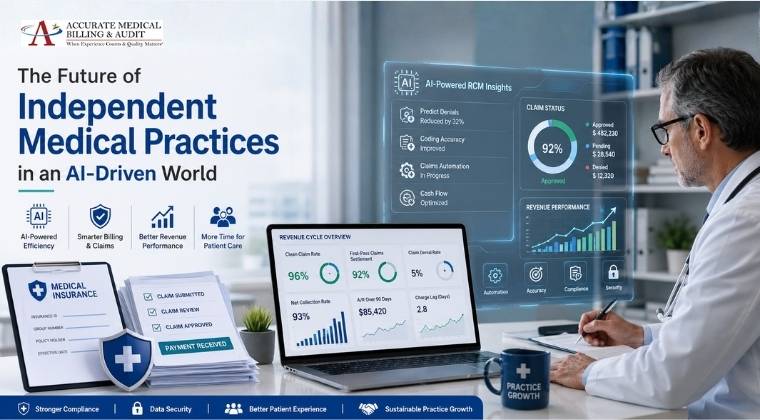
Meanwhile, artificial intelligence (AI) is rapidly transforming healthcare operations. AI isn’t replacing independent practices; instead, it offers new opportunities to improve efficiency, strengthen financial performance, and allow providers to spend more time on patient care. It’s all about knowing where AI fits in and where experienced professionals still play an indispensable role.
Why Independent Practices Face Greater Challenges
Independent practices can have some of the following characteristics as opposed to large health systems:
- Limited administrative staff
- Tighter operating budgets
- Smaller technology investments
- Greater reliance on timely reimbursements
- Less management support to deal with regulatory changes
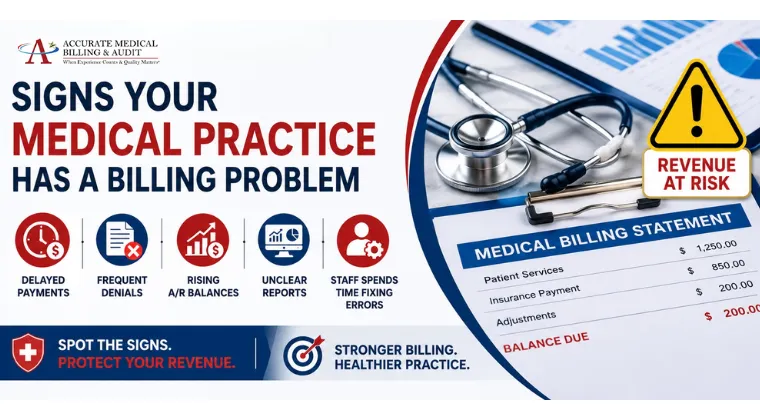
Any minor delays or errors, including coding mistakes, delayed claims and employee change, can have a major impact on cash flow. With the changing landscape of reimbursement models, many independent practices are seeking to leverage technology to continue to compete without losing the personalized care that makes them stand out.
AI Is Changing Healthcare But Not Replacing Providers
The common perception is that AI in healthcare will replace doctors or perform diagnoses. In reality, AI is making its greatest impact behind the scenes.
AI can automate repetitive administrative tasks, process large volumes of data, and identify patterns that improve operational efficiency. As a result, physicians and staff can devote more time to patient care rather than paperwork.
The adoption of AI is becoming increasingly widespread to support:
- Medical billing
- Revenue cycle management
- Claims review
- Documentation assistance
- Scheduling appointments
- Communicating with patients
- Predictive analytics
- Workflow automation
Its purpose isn’t to replace clinical judgment but to reduce administrative burdens and improve accuracy.
Smarter Medical Billing Improves Financial Stability
The most practical applications of AI are observed in independent practices in revenue cycle management.
With the help of intelligent billing processes, the help of AI can be utilized in the following ways:
- Detect coding errors
- Find documentation gaps
- Detect potential denials
- Ensure high priority of accounts receivable follow-up
- Spot trends in billing activity that affect reimbursements
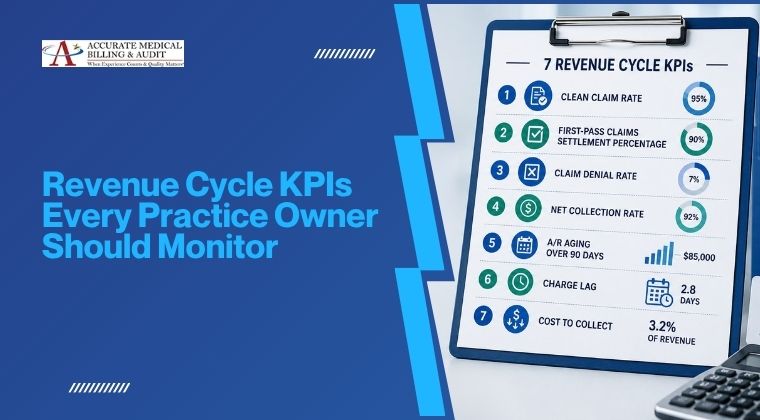
By identifying issues before claims are submitted, practices can improve clean claim rates and reduce the need for costly rework. According to industry reports, many healthcare organizations have already achieved measurable improvements in billing efficiency, while effective denial management continues to be a major priority.
Administrative Automation Makes Employees Free for Other Tasks
Nevertheless, there are still considerable administrative hours that are being utilized in a practice.
The utilization of artificial intelligence allows automating such activities as:
- Insurance eligibility check
- Reminder about appointments
- Assistance with prior authorization
- Patient registration
- Documentation summary
- Billing
- Report generation
Automation enables staff to focus on responsibilities that require personal interaction and critical thinking.
Better Decision-Making Through Data
Large operational data volumes are produced on an everyday basis by independent practices.
This data can be used to train AI systems that can detect patterns and trends, such as:
- Revenue trends
- Denial patterns
- Appointment no-show rates
- Patient scheduling bottlenecks
- Coding opportunities
- Cash flow performance
These insights help practice leaders make informed decisions that improve operational efficiency and financial performance.
Improving Patient Experience
Patients expect the convenience that they get in other parts of their lives to be available in healthcare.
AI could help independent practices improve patient experience by helping them with:
- Appointment scheduling online
- Sending automated reminders
- Speeding up insurance verification
- Streamlining digital check-ins
- Communicating about billing faster
- Sending personalized follow-up messages
These improvements simplify administrative processes while enhancing the overall patient experience. However, AI should complement—not replace—the personal relationships that independent practices are known for.
Why Human Expertise Is Essential
There are things that machines cannot do yet, which include:
- Medical coding
- Appeals on claims
- Compliance with regulations
- Clinical decision making
- Communication with patients
- Strategy development
- Revenue optimization
Even if it can find patterns and handle routine tasks, technology has its limits.
Preparing for an AI-Driven Future
Independent practices do not have to change everything in their practice.
Rather, many are making significant strides in implementing AI, starting with those areas where the most significant returns are expected, including:
- Medical billing automation
- Claims management
- Documentation support
- Patient communication
- Workflow optimization
This step-by-step approach helps practices improve efficiency while maintaining control over their operations.
The Role of Professional Medical Billing Partners
The demand for skilled medical billing specialists is increasing with the rise in the prevalence of AI.
While technology can be used to handle an ever-growing number of repetitive tasks and identify potential issues, the successful revenue cycle management will still rely upon the expertise of knowledgeable revenue cycle management professionals.
The hybrid model that leverages AI technology for efficiency and human oversight for accuracy and optimization of reimbursements and risk reduction is the best way forward. With the rise in AI’s importance, many industry professionals often highlight that the value of AI is enhanced by the human touch of skilled revenue cycle professionals.
Looking Ahead
The future of independent medical practices isn’t about AI versus humans—it’s about using AI strategically.
While AI can reduce administrative burdens, improve billing accuracy, optimize revenue cycle performance, and enhance the patient experience, its success ultimately depends on the expertise of healthcare professionals.
Independent practices can transform into an AI-powered healthcare environment with the help of Accurate Medical Billing & Audits’s industry knowledge and cutting-edge technology. We help providers to reduce the time spent on administrative headaches and more on providing patient care of the highest standard with efficient billing, proactive auditing and compliant revenue cycle management.